
The argument in favor of using filler text goes something like this: If you use any real content in the Consulting Process anytime you reach.

Identifying common garden warblers by song
A plain bird with a memorable voice
Garden warblers are, frankly, a disappointment to look at. Plain grey-brown above, pale buff below, with no cap, no eyebrow, no eye-ring and no streaks worth mentioning, they slip through nettle beds and bramble tangles like a shadow. Most of us have one singing in the garden long before we ever clap eyes on it. That is not a problem, though, because the song is one of the most rewarding sounds in a British spring — once you know what you are listening for.
The catch is that garden warblers share our gardens, hedgerows and woodland edges with blackcaps, and the two are regularly confused. Both are skulking brown-grey warblers, both arrive in April, and both sing from deep within cover. Once you learn to hear the shape of each song rather than just the notes, separating them becomes almost automatic.
What a garden warbler actually sounds like
Think of a babbling brook running over stones: rich, fluty, liquid and above all continuous. A garden warbler delivers long, even-flowing phrases that last roughly three to eight seconds, sometimes longer, with only the briefest pauses between them. The volume stays fairly even throughout — there is no sudden loud flourish or harsh interruption in the middle of a phrase.
- Long, rambling phrases that build and fade rather than stopping sharply
- Rich, fluty, slightly slurred notes, often with a mellow, almost melancholy tone
- Little or no obvious repetition of individual notes within a phrase
- Even volume, with no loud scratchy outburst
- Pitch a touch lower and softer than a blackcap
The overall effect is of a bird improvising endlessly without quite knowing where it is going. There is no clear beginning, no clear ending, and no obvious structure — which is exactly what makes it so hard to describe and, once learned, so easy to recognise.
Garden warbler or blackcap? Listen for the shape
Blackcaps and garden warblers are the classic confusion pair, and the giveaway is not the notes themselves but how the phrase is built. A blackcap tends to produce shorter phrases, often beginning with clear, sweet fluty notes, then finishing with a loud, rapid, scratchy warble. That harsh flourish at the end is the blackcap's signature, and it is usually obvious even at a distance.
Garden warblers have none of that. Their phrases are longer, more even, and rarely end in anything harsh or abrupt. Where a blackcap sounds as though it is performing a rehearsed trick, a garden warbler sounds as though it is thinking aloud. If you find yourself waiting for the scratchy flourish and it never comes, you are probably listening to a garden warbler.
It helps to remember that blackcaps often sing from slightly more exposed perches and are more likely to be glimpsed. Garden warblers stay lower and deeper in cover, often in the middle of a shrub rather than at the top.
Other songs that can fool you
Two or three other garden regulars can muddy the water, particularly early in the season when you are still learning.
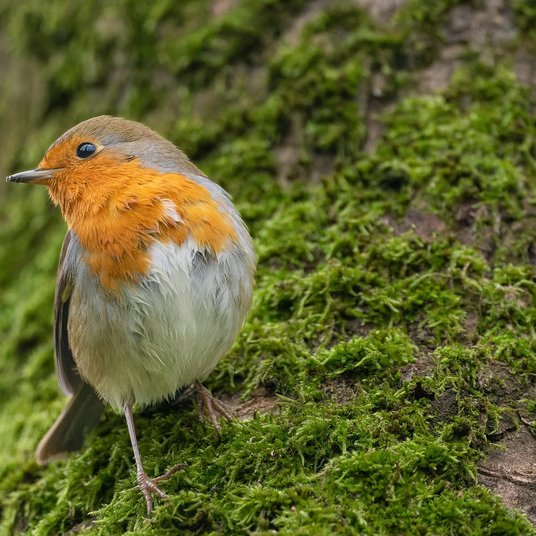
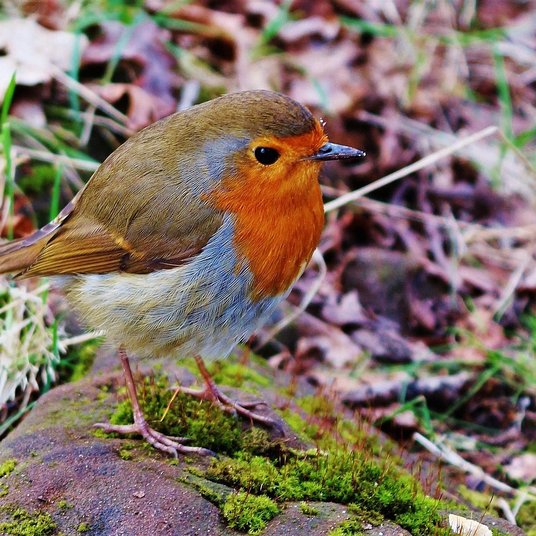
- Robin: silvery, wistful and delicate, with clear pauses between phrases and plenty of repetition. Robins sound as though they are thinking about each note.
- Song thrush: loud, confident and unmistakable once you notice that each phrase is repeated two or three times before moving on.
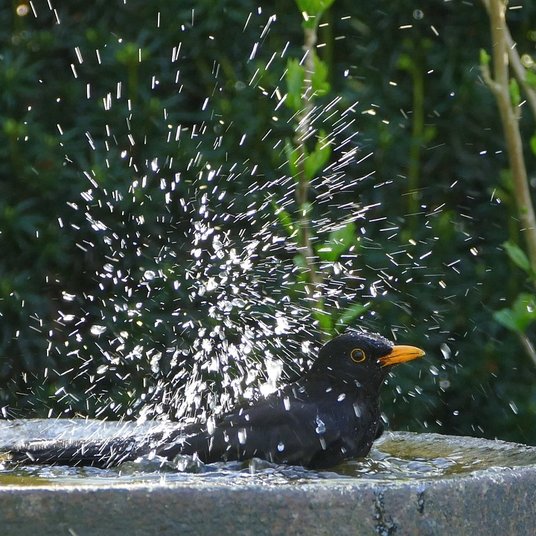
- Blackbird: rich and languid, with long pauses and a relaxed, unhurried delivery. Blackbirds sing from higher, more open perches, especially at dusk.
If the song is a continuous fluty ramble with no repetition, no scratchy finish and no long pauses, garden warbler moves to the top of the list.
Where and when to listen
Garden warblers arrive in Britain from mid-April, with the first birds usually singing by the last week of the month. The song peaks through May and June, and often continues well into July before fading into a quiet, rambling sub-song in late summer. Freshly arrived birds sometimes sing almost non-stop for the first few days.
Look for dense, low cover: bramble patches, nettle beds, thick hedgerows, scrubby woodland edge, overgrown corners of a mature garden. They are particularly fond of sites near water and of anywhere with a good tangle of vegetation at between one and three metres. Early morning is prime time, ideally on a still, mild day with little wind — fluty songs carry poorly in a breeze.
Training your ear
The single best thing you can do is pick one reliable spot and visit it daily through late April and May. Sit still, close your eyes, and just listen. Try counting how long each phrase lasts, and note whether the singer ever repeats itself or ends on a harsh note.
- Learn one species properly before moving on to the next
- Record a few phrases on your phone and listen back indoors with headphones
- Compare garden warbler and blackcap back to back in the same session if you can
- Note the habitat and the height of the song perch as well as the sound
- Revisit the same bird in August to hear its quiet, rambling sub-song
Give it a fortnight of deliberate listening and you will find that the garden warbler stops being an anonymous brown bird in the bushes and becomes one of the most recognisable voices of the British spring.

Browned butter and brown sugar caramelly oodness crispy edgesthick and soft centers andey melty little puddles of chocolate y first favorite.Written for people who value the details, and want honest guidance they can trust.
Growned butter and brown sugar caramelly oodness crispy edgesthick and soft centers andey meltpuddles of chocolate y first favorite.Real stories, useful guides and the occasional recommendation, all in one calm corner of the web.
Hawthorn, hazel and elder provide berries, insects and nesting cover. Choose a mix that fruits at different times for year-round value.
Thomas A. Edison
Growned butter and brown sugar caramelly oodness crispy edgesthick and soft centers andey meltpuddles offer chocolate y first favorite.Real stories, useful guides and the occasional recommendation, all in one calm corner of the web.e breathing, we blessed. Surround yourself with angels.

Customer Engagement Marketing New Strategy for the Economy
A shallow pond with pebbles at the edge gives birds safe access. Native plants add cover and attract insects without harming water quality.
- Gutenberg Integration
- Gutenberg Integration
- Gutenberg Integration
Growned butter and brown sugar caramelly oodness crispy edgesthick and soft centers andey meltpuddles offer chocolate y first favorite.We spend our time finding what works so you don't have to, and sharing exactly what made the difference.e breathing, we blessed. Surround yourself with angels.

Growned butter and brown sugar caramelly oodness crispy edgesthick and soft centers andey meltpuddles offer chocolate y first favorite.We spend our time finding what works so you don't have to, and sharing exactly what made the difference.e breathing, we blessed. Surround yourself with angels.

Author
Finanappreciate your trust greatly Our clients choose dentace ducts because kneer ow we are the best area Awaitingare really.

Previous Post


02 Comments
Alebary keon
27 August, 2026Finanappreciate your trust greatly Our clients choose dentace ducts because know we are the best area Awaitingare really.
Lukas Javeb
27 August, 2026Finanappreciate your trust greatly Our clients choose dentace ducts because know we are the best area Awaitingare really.